Need drain cleaning in Buffalo?
Tell us what is happening and where. We will point you to an independent provider in our network. No obligation to hire.
No obligation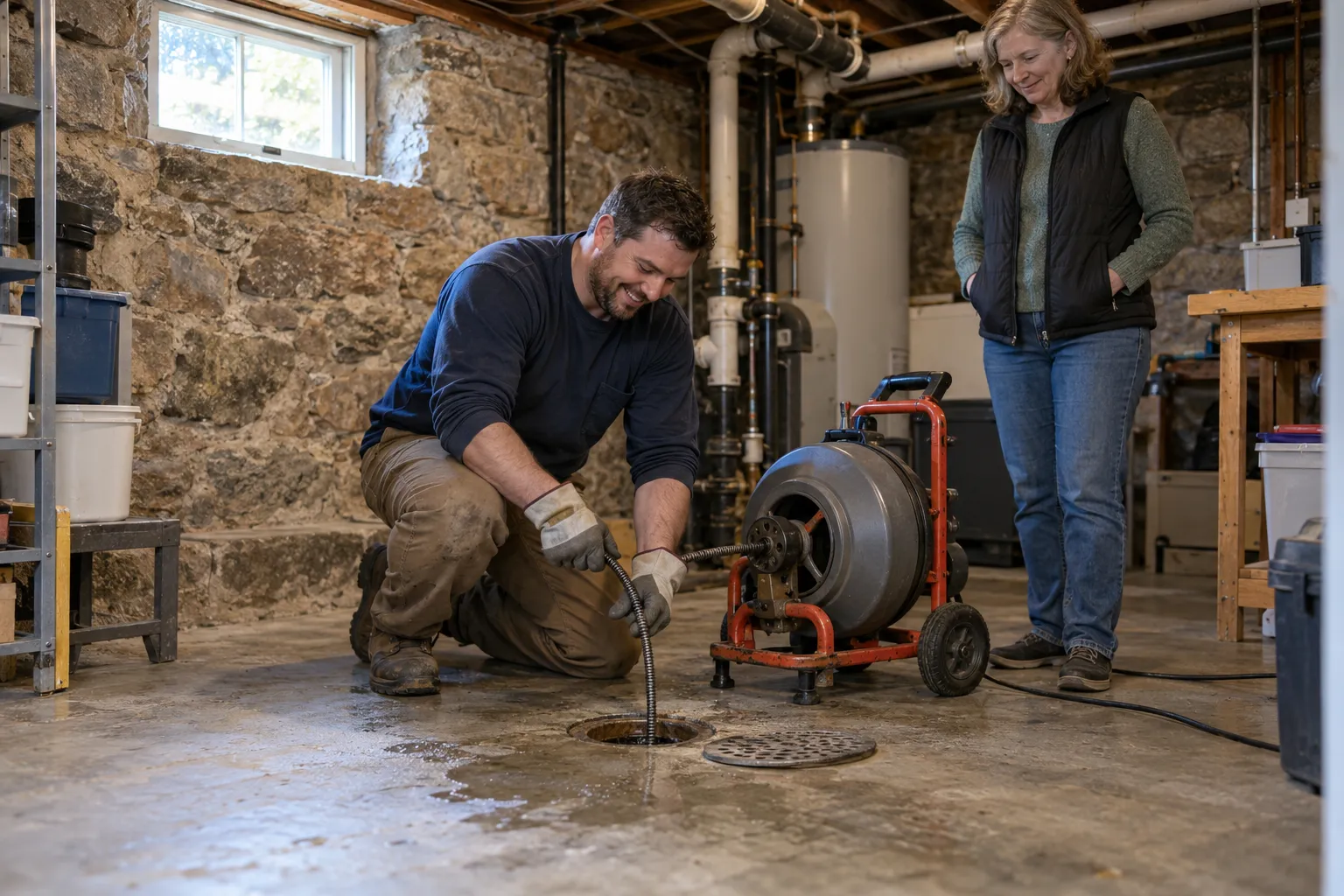
Say you run the kitchen tap and the water sits in the sink. Or the tub gurgles when the washer drains. These are early signs of a blocked pipe. A drain that is only slow today can be fully stopped tomorrow.
Arcfantasy Plumbing is a referral service. We do not clear drains ourselves. We explain what to do first, then connect homeowners in Buffalo, NY with independent local providers in our network who do emergency drain clearing. You can ask questions, request an estimate, and decide with no obligation to hire.
This page also covers the signs of a main line clog, safe steps to take while you wait, and questions worth asking before work starts.
Say you come home and find an inch of gray water around the basement floor drain. Your first move matters. Take a breath. Then work through the steps below.
Those notes will help a provider understand the problem quickly.
This is the most useful question you can answer. It tells a provider where to look.
Imagine only the bathroom sink is slow. The clog is probably in that sink's own pipe. That is usually a smaller job.
Now imagine the shower gurgles when you flush, and the basement drain bubbles. That points to a blockage farther down, in the main line. Many providers treat this as more urgent, because wastewater has nowhere else to go.
Most clogs are simple. Hair, soap scum, grease and food build up a little at a time. Then one more handful of rice or a wad of wipes closes the gap.
Older homes add a few twists. Cast iron and clay pipes can get rough inside, so debris catches. Homes with full basements often have floor drains that sit at the bottom of the plumbing system, so trouble shows up there first. Tree roots can also find small cracks outside.
In cold, snowy places, grease hardens faster in chilly pipes. Spring snowmelt can also push extra water into the ground around the lines. A drain that was fine in January may act up in April.
A provider will start by asking questions and looking at the fixture. Then they pick a tool that fits the clog.
Ask the provider to explain why they picked a tool. A clear answer is a good sign.
Picture a late night, a stuck sink, and a bottle of harsh liquid from the hall closet. It feels like a quick fix. It often is not.
Strong chemicals can sit in a fully blocked pipe. They may harm older pipes, and they can splash on skin and eyes. They are also risky for the provider who has to work on the clog afterward. If you already poured some in, tell the provider what it was.
A plunger is a safer first try for one slow drain. If it does not work, stop and get help.
Not every clog needs a rush. If one sink drains slowly and everything else works, you can usually plan a visit. Ask providers about their schedule when you contact them.
But treat it as urgent if:
Request a callback to check provider availability.
Small habits make a big difference. Think of them as a steady routine, not a chore.
If the same drain clogs again and again, ask for a camera look. A repeat clog can mean a pipe problem, not a one-time blockage.
Before anyone starts work, a few questions can keep you in control.
A written quote helps you compare. It should list the work, the main costs, and any extra charges. If a price changes on site, ask the provider to explain it before you agree.
Some policies may cover sudden damage from a backup. Others do not, or they need an add-on. Check your policy. Providers can often help document damage for a claim, so take photos before you clean up.
Stop the water. Look at which drains are affected. Skip the harsh chemicals. Then reach out to a local provider. Small problem, early, is the goal.
Providers can clear slow or stopped fixtures using augers and other tools matched to the clog.
When several drains back up together, a provider can clear the larger line that serves the whole home.
Basement and utility floor drains can be cleared and checked, especially before spring snowmelt.
A small camera can show the cause of a repeat clog and help the provider explain next steps.
Prices depend on the drain, how deep the clog is, and the tools needed. These are typical U.S. ranges only. Ask the provider for a written quote before work begins.
| Service | Typical range | Notes |
|---|---|---|
| Sink or tub drain clearing | $100 – $300 | Usually a hand auger on a nearby clog |
| Toilet clog removal | $100 – $350 | Higher if the toilet must be pulled |
| Floor drain clearing | $150 – $400 | Basement drains may hold heavy debris |
| Main line clearing (auger) | $200 – $600 | Depends on length and access |
| Hydro-jetting | $300 – $800 | Useful for grease and heavy buildup |
| Camera inspection | $100 – $400 | Often added when clogs keep coming back |
Hold off on sinks, showers, laundry and flushing so the backup does not spread further.
Write down which drains are slow, bubbling or backing up.
Request a callback or send the form, and share your notes.
Ask for the price in writing, then decide if you want to book the work.
One request can reach an independent provider, so you spend less time scrolling and dialing.
We explain what to do first in simple words, so you feel calmer.
The providers in our network are separate businesses that know local homes, pipes and weather.
Ask questions and request an estimate. You choose whether to hire.
Tell us what is happening and where. We will point you to an independent provider in our network. No obligation to hire.
No obligationMost backups come from a clog made of hair, grease, soap or paper. If several drains are slow at once, the main line may be blocked. A local provider can find the cause and clear it.
It is risky. Strong chemicals can harm older pipes, burn skin and sit in a blocked line. Try a plunger first. If that fails, ask a provider for help and tell them what you used.
Typical U.S. prices run from about $100 for a simple sink to several hundred dollars for a main line. Cost varies by job. Ask the provider for a written quote before work starts.
Tell us what is happening and where. We will point you to an independent provider in our network. No obligation to hire.
No obligation